Africa
Week One
17–21 January
Accra
Week Two
5–9 June
Nairobi
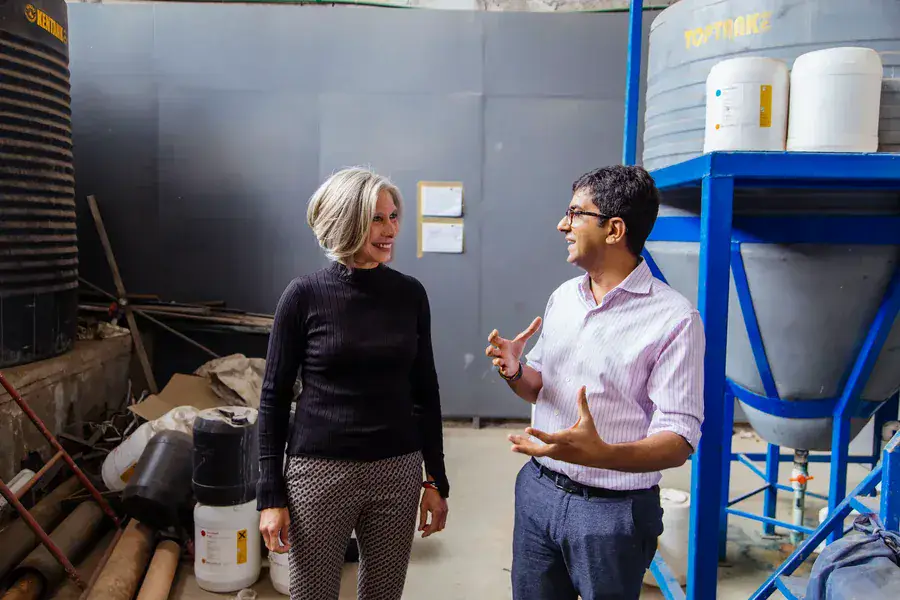
Designed in Silicon Valley and delivered in Africa, Indonesia, and South Asia, the Stanford Seed Transformation Program prepares established CEOs to grow and expand their businesses with confidence. Led by Stanford Graduate School of Business faculty and local advisors, this 10-month journey, crafted specifically for busy leaders, extends into lifelong membership, unlocking continuous learning and business support.
of companies report securing capital after the Seed program
increased revenue after the Seed program
median change in revenue one year after the Seed program
collective capital secured through loans, equity, and grants after Seed
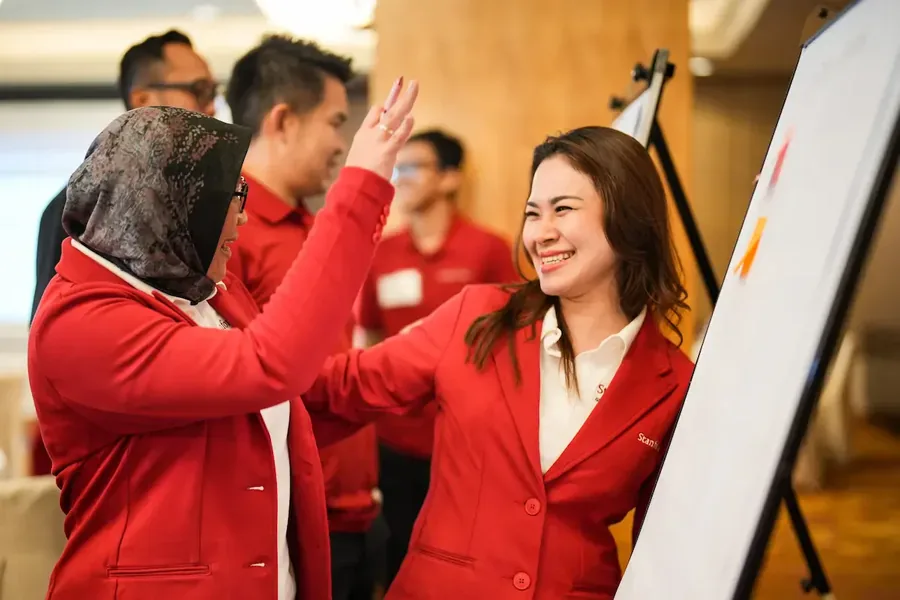
Part-time | Hybrid (in-person + online) | Designed for busy CEOs and founders
January – November 2028 | 10 Months
Two one-week sessions for CEOs/founders
with Stanford Graduate School of Business faculty
Week One
17–21 January
Accra
Week Two
5–9 June
Nairobi
Week One
17–21 January
Bali
Week Two
5–9 June
Bali
Week One
17–21 January
Chennai
Week Two
5–9 June
Chennai
CEOs / Founders: 5–8 hours/week
Management Team: 2–4 hours/week
Two on-site, full-day sessions hosted at your company and two online workshops. Dates coordinated with you & your team.
Four structured peer roundtables focused on solving key business challenges.
Travel may be required.
Experience real-time and on-demand translation during live lectures and recorded sessions. Available in 50+ languages, including Afrikaans, Arabic, French, Portuguese, Kiswahili, IsiZulu, Bahasa Indonesian, Bengali, Gujarati, Hindi, Punjabi, Kannada, Nepali, Sinhala, Tamil, and Urdu.
Receive two Stanford Graduate School of Business certifications—one for you and one for your company.
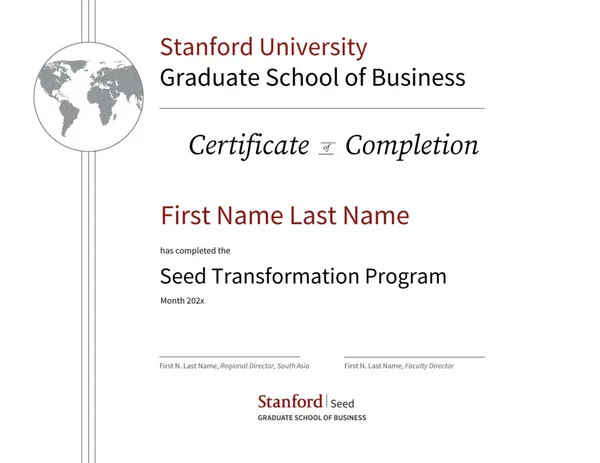
CEO Certificate of Completion
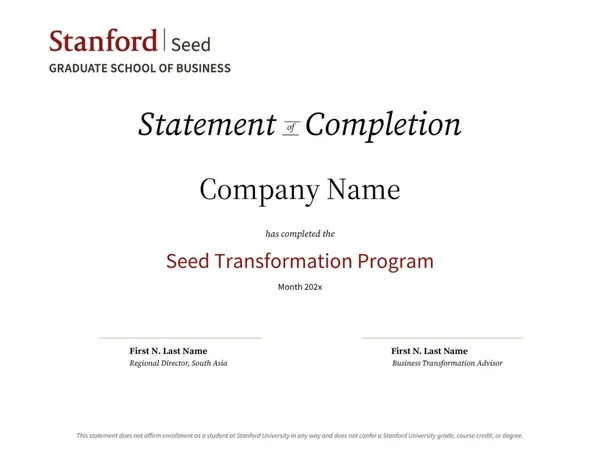
Company Statement of Completion
Due to donor support, this program is offered to you at a small portion of its actual cost.
Made possible by the generosity of founding donors Robert King (MBA ‘60), Dorothy King, and many others, including the De Beers Group—for participants in Botswana, Namibia, and South Africa—and AMMAN (PT Amman Mineral Internasional Tbk)—for participants in Indonesia.
*Travel and lodging not included. Lunch and tea/coffee breaks provided throughout In-Person Classroom Sessions.
A limited number of additional scholarships/subsidies (up to 60% of the donor-supported program fee) may be awarded to those based on company size, business stage, and demonstrated financial need. Scholarships are limited and not guaranteed.
Applicants who advance to the interview stage will receive details on how to apply.

Position
CEO or Founder
of a for-profit business
Region
Africa, Indonesia, or South Asia
Primary operations
Team Size
Management team of at least three
in addition to the CEO or founder
Industry
Most industries are eligible
Annual Revenue
USD 300K–15M
Equivalent to approximately: INR 2.7–135 Cr · IDR 4.5–230 billion
If your business’s annual revenue is under:
Explore Stanford’s programs for early-stage and small growing enterprises.
Discover Programs
My own journey with Stanford Seed has been nothing short of life-changing. It’s reshaped how I lead, how I think about scale, and how I build a company that strives to make a lasting impact. Being part of the 2023 cohort was more than a program, it was an awakening.
 Nasir AliFounder & CEO, Gallant Sports
We’ve nearly doubled our enrollments since we went to the Seed program.
 Prisca MuyodiCEO, Taraji Afrika Schools
By the time the program was done, I was running a processing plant more than 20 times the size. I grew from 40 employees at that time to close to 200. Right now, it is 300. So it was a rapid growth. I would say our success is traceable to the Seed program.
 James OgbeCEO, PESO Energy Services
I think [Seed] was one of the best decisions that I could have ever taken. Most of the programs they work with you, not your team. So I think that was the differentiator. Before the program, we were working with about 100,000 farmers. Today, we are working with close to 250,000 farmers. We were at around USD 3 million revenue when we started. And today we have close to USD 6 million revenue.
 Saurabh AgarwalFounder & CEO, GROWiT India
A lot of MBA programs are generic. But with Stanford Seed, what’s different is the pedagogy and the delivery of the program; it is very, very unique. It is specifically for small and medium-sized enterprises. The best part is you learn one part of the program, go back to your company, apply what you’ve learned, and then come back. Learn, apply, learn, apply.
 Sumit SinhalFounder and Director, Kins Health
It’s like going to business school, but I think it’s even better…What I found with Seed is it has given me the tools to achieve my dreams.
 Nwamaka OkoyeCo-Founder and Managing Director, Housessories
The certificate is the least important thing you’ll get out of the program.
 Anjali JoshiDirector, Drishti Eye Hospitals
The most impactful change I made was implementing a clear strategic focus and leadership structure.
 Zaky Muhammad SyahCo-Founder & CEO, dibimbing.id
I feel more comfortable and confident as a leader than ever.
 Sarika ModiFounder & CEO, Triple Eight
Stanford Seed. Three words: a quiet revolution. Some experiences leave a mark. Others transform you. Stanford Seed belongs firmly to the latter.
 Aniela Vé KouakouFounding Partner, AGILOYA AFRIQUE
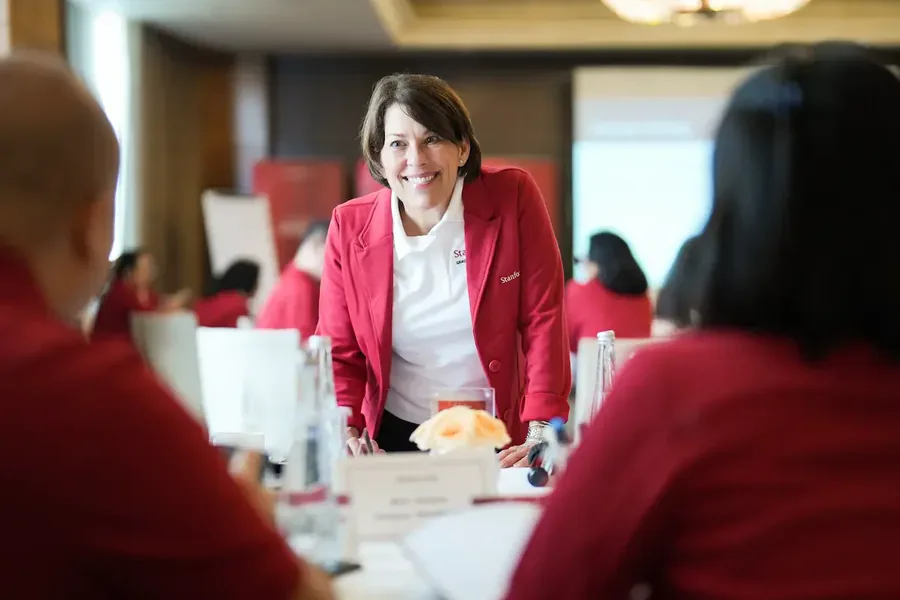
The Seed Transformation Program’s rigorous leadership and business growth curriculum guides CEOs/founders and their key managers through seven core modules essential for transformative scaling. From strategy and business model development to leadership growth and financial management, the comprehensive curriculum covers all aspects needed to scale an established enterprise for exponential growth. Faculty sessions incorporate hands-on AI-based tools and exercises, equipping participants with practical methods for process improvement and leveraging technologies to innovate. The program culminates in the completion of the company’s Transformation Plan—an actionable roadmap that synthesizes all learnings into a strategic blueprint for growth.
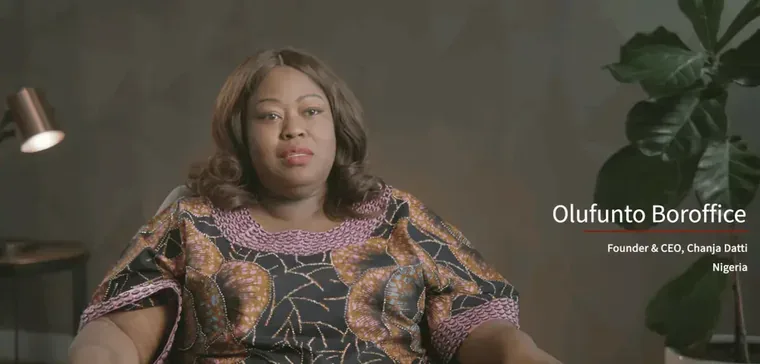 Olufunto BorofficeFounder & CEO, Chanja Datti · Nigeria
Meet entrepreneurs who have completed the Seed Transformation Program. Hear how they are growing their businesses and the impact they are having in their communities.
Watch Video1
February – May 2027
Submit your written application. We’ll review for core criteria, including revenue thresholds and leadership roles.
2
May – June 2027
Selected applicants submit a video interview and financial documentation for comprehensive review.
3
July – August 2027
Selected candidates participate in live interviews with our selection committee.
4
August/September 2027
Our admissions committee curates the final cohort to ensure diverse perspectives and peer compatibility. We review applications on a rolling basis. Early submission is encouraged.
September 2027
Decisions Announced | Commitment Deadline
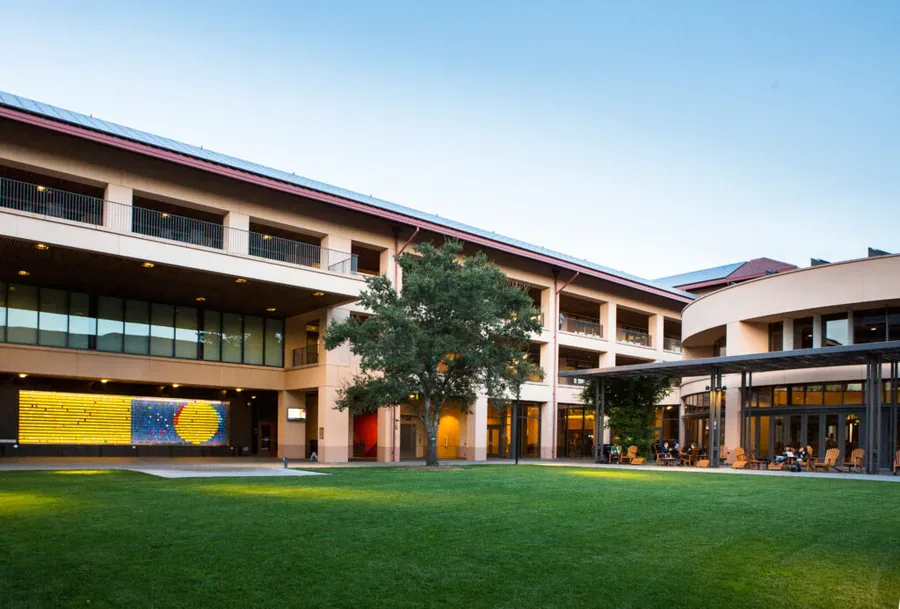
Stanford University, founded in 1885 and located in the heart of Silicon Valley, is a leading research institution known for its academic excellence and innovation, consistently ranking among the leading universities globally. The Stanford Graduate School of Business, established in 1925, is widely recognized as one of the top MBA programs in the world, known for its rigorous curriculum, world-class faculty, and strong emphasis on leadership development and social impact. Stanford MBA graduates go on to lead Fortune 500 companies, launch groundbreaking startups, and drive transformative change across industries.
Stanford Seed is a philanthropic institute based at the GSB with locations across Africa, South Asia, and Indonesia. The institute partners with entrepreneurs in emerging markets to help them build thriving enterprises that transform lives.
The Seed Transformation Program is a 10-month, part-time leadership and business growth program from Stanford Seed, an initiative of Stanford Graduate School of Business. It is for CEOs and founders of established businesses in Sub-Saharan Africa, South Asia, and Indonesia with annual revenue between US $300,000 and US $15 million. The program is taught by Stanford GSB faculty and local expert practitioners.
You and your management team apply what you learn directly to your company. You finish with a Transformation Plan, a 3–5-year roadmap for growing your business. Since 2013, more than 1,500 entrepreneurs have completed the Seed Transformation Program.
To apply to the Seed Transformation Program, you must meet all four requirements:
The Seed Transformation Program fee for the 2028 cohort, per company, is:
The Seed Transformation Program isn’t free, but thanks to the generosity of our donors, the fee is a small portion of the program’s actual cost. It covers you and up to five members of your management team. There’s no application fee and no other fees during the program. The fee doesn’t include travel or lodging for the two in-person weeks, which are for CEOs and founders only. Lunch and tea and coffee breaks are provided throughout the in-person classroom sessions. Installment plans are available at admission.
Yes. Stanford Seed offers scholarships that reduce the Seed Transformation Program fee by 20–60%, based on company size, business stage, and demonstrated financial need. If you’re selected for the interview stage, you’ll be invited to apply, so cost shouldn’t stop you from applying. Scholarships are limited and not guaranteed.
No. Despite its name, Stanford Seed isn’t a seed fund. Stanford Seed doesn’t invest in companies, give grants or loans, or arrange fundraising. Scholarships lower the Transformation Program fee; they aren’t funding for your business.
What the program does is help you become investor-ready. You’ll sharpen your growth strategy, strengthen your financial management, learn to weigh equity, debt, and grant options, and build a stronger case for capital.
The Seed Transformation Program runs part-time for 10 months, January–November 2028, for the 2028 cohort. CEOs and founders spend about 5–8 hours a week; management team members spend about 2–4.
Most of the program is online. CEOs and founders also attend two required in-person classroom weeks, 17–21 January 2028 and 5–9 June 2028. These weeks aren’t available online.
Your Business Transformation Advisor also leads four workshops with you and your management team: two at your company and two online. All in-person sessions take place in the region, not on Stanford’s campus.
Applications for the 2028 cohort of the Seed Transformation Program close 1 May 2027. Selection has three steps:
We announce admission decisions in mid-September. Apply to the Seed Transformation Program
Participants who complete the Seed Transformation Program receive a Certificate of Participation, and their company receives a Statement of Completion. The program isn’t a degree. It doesn’t award a Stanford MBA or Stanford alumni status.
After the program, you join the Stanford Seed Transformation Network, Seed’s community of past participants. The Network offers coaching, consulting, Stanford student interns, and connections with fellow business leaders.
For in-depth discussions and questions, schedule office hours with a Seed Program Advisor or join an upcoming info session.
Join an Info Session